Policy DBC1: General Design Principles in the Parish
- Development proposals should, as is relevant to their nature and location,
have regard to the provisions of the Vale of White Horse Design Guide, andrespond to the essential character of their local area as defined by the Cumnor Parish Character Assessments, and the design principles set out within the relevant Character Assessment attached as Appendix A.- Development proposals should also take into account the following general design principles so that they integrate into and enhance their surroundings:
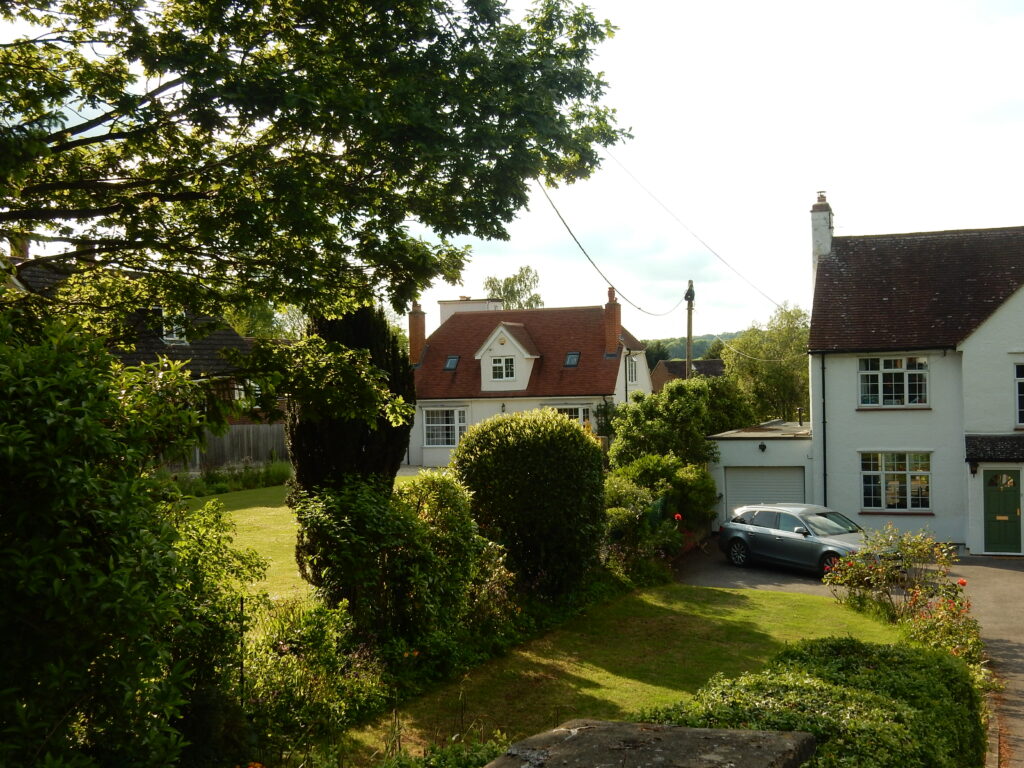
- Maintaining the common one and two-storey character and the strong character formed by common plots shapes, sizes, orientation and building to plot ratios by avoiding backland development that will undermine this character without precluding innovation and change where appropriate, especially where an increased scale or density of development is justified in accordance with national decision-making policies L2 and L3
- Responding to the design principles for backland and other infill development set out in the Cumnor Parish Character Assessment attached as Appendix A
- Maintaining simple roof forms of buildings in the parish
Maintaining the strong character formed by common plot shapes, sizes, orientation and building to plot ratios by avoiding backland development that will undermine this characterTaking an integrated approach to highways, parking, public spaces and buildings so as to create a development with a sense of place, including integrating car parking into the design, using varied forms of provision toaAvoiding over-reliance on on-street parkingPrioritising pedestrian permeability and taking opportunities to provide connections and improved access to the footpath network and other walking and cycling routesProviding active frontages, including doors and windows, to streets and spaces and avoiding high walls and fences that create inactive frontagesRetaining mature trees and hedgerows or, where there is an overriding case for their removal, providing like-for-like replacement;- Retaining original features in alterations and extensions, such as doors, windows, chimneys and wall treatments where this approach is appropriate to the wider development proposal
- Ensuring balconies and raised patios do not reduce the amenity or privacy of neighbours
Sensitively integrating new development into the landscape and topography;- Ensuring soft boundary treatments (such as low walls, hedges and native species planting) are used on the edge of the rural area
- Farmstead and agricultural conversions should, where appropriate, retain and complement the historic fabric and character of the existing buildings
- Avoiding light pollution by specifying and locating external lighting to maintain the dark skies of the Parish
Appendix A:



- This policy sets out the high expectations for design quality in the Parish by emphasising
thosedesign principlescontained in the Vale of White Horse Design Guidethat are especially relevant to Cumnor. It also cross refers to the separate Cumnor Parish Character Assessment evidence prepared for the Neighbourhood Plan that will be relevant to proposals depending on their nature and location. Proposals will also be expected to demonstrate how they have had regard to the design principles set out within the Character Assessments attached as Appendix A in their design and access statements. A very clear evidence base is provided in the Character Assessments, which articulate in detail the local character and distinctiveness of the parish to allow development to respond to local context (as required by National Policies DP3.1.a & h which currently states: “1. To respond to their context and create well-designed places development proposals should: a. Context: respond to the history, character and features of the site and its setting, so that it integrates into and enhances its surroundings (such as through the arrangement of development plots and buildings, the use of materials and architectural features, and the restoration, reuse and integration of heritage assets). This should not preclude innovation and change where appropriate, especially where an increased scale or density of development is justified in accordance with policies L2 and L3; … h. Identity: create visually attractive, distinctive and characterful development to establish or maintain a strong sense of place and pride, including through the use of a coherent palette of materials, design features and planting.” (which is also reflected in paras. 132, 135, and 139 of the 2024 NPPF). - The policy also continues to seek the retention of those elements which contribute to the existing character of the area without precluding the innovation and change promoted by national decision-making policies L2 and L3 which currently states:“L2: Making effective use of land 1. Substantial weight should be given to the benefits where a development proposal would achieve one or more of the following: a. Remediating despoiled, degraded, derelict, contaminated or unstable land; b. Making better use of vacant and under-utilised land and buildings (such as by bringing back into residential use empty homes and other suitable buildings; converting space above shops; redeveloping under-utilised retail sites; and building on or above service yards, lock-ups, car parks and other transport infrastructure); c. Making effective use of previously developed land and buildings through temporary uses, in situations where alternative development is anticipated within a reasonable period (including as a result of the land being allocated for an alternative purpose in the development plan); d. Creating additional homes within settlements by using the airspace above existing residential and commercial premises, or through sensitive redevelopment or additional development within existing plots (including, but not limited to, the addition of mansard roofs, proposals to fill gaps in the existing roof line, the introduction of higher buildings at street corners and additional units within residential curtilages). Such proposals should: i. be consistent with the overall street scene, other than where it is appropriate to have larger buildings such as at street corners, or where specific changes are provided for through a design code which forms part of a development plan; ii. maintain safe access and egress for occupiers and users, and acceptable living standards for residents and neighbours in terms of access to daylight, sunlight, privacy and external amenity space; and iii. where the development would involve the use of residential curtilages, not occupy more than twice the footprint of the existing building on the site, and retain at least 50% of the non-developed area within the building curtilage43. 2. A condition of simultaneous development should not be imposed on an application for multiple upward extensions unless there is an exceptional justification. 3. Proposals for land which is not previously developed should use development footprints which optimise a site’s development potential. L3: Achieving appropriate densities 1. Development proposals should make efficient use of land, taking into account the identified need for different types of housing and other development, local market conditions, the availability of infrastructure (including sustainable transport options) and its scope for improvement, a site’s connectivity and the importance of securing welldesigned, attractive and healthy places. 2. Within this context development proposals for residential and mixed-use development within settlements should contribute to an increase in the density of the area in which they are situated. The existing character of an area should be taken into account, in accordance with policy DP3, but should not preclude development which makes the most of an area’s potential. 3. Minimum densities for residential development proposals are appropriate in locations which provide high levels of connectivity to jobs and services. Where development proposals for housing or mixed-use schemes are within reasonable walking distance of a railway station44, a density of at least 40 dwellings per hectare should be achieved within the net developable area of the site, or 50 dwellings per hectare where the station or stop is defined as ‘well-connected’45. 4. Development proposals that do not make efficient use of land in accordance with this policy should be refused. 43The existing building is to be assessed as the building as existing on the date of the publication of this Framework. 44For the purpose of this policy references to railway stations also includes stops on underground, tram and other light rail systems. 45Well-connected rail stations and underground, tram and light rail stops are those in a top 60 Travel to Work Area located partially or fully within England by Gross Value Added (GVA) and which, in the normal weekday timetable, are served (or have a reasonable prospect of being served due to planned upgrades or through agreement with the rail operator) throughout the daytime by four trains or trams per hour overall, or two trains or trams per hour in any one direction.” (which reflects para. 130 of the 2024 NPPF although it is noted that the provisions on increasing densities are much more specific).
- The design guidance within the Character Assessments uses the words ‘must’, ‘should’, and ‘could’. Where the word ‘must’ is used, this means the relevant design guidance must be complied with and it is not expected that there will be exceptions made. Where the word ‘should’ is used, this means in general it is expected that the design guidance will be complied with, but it is recognized that there may be exceptions made due to specific circumstances. It does not imply the guidance is optional. If an applicant considers that their case is an exception, then they must include information explaining the reasons why they consider such an exception should be made. This would generally be due to physical constraints. Where the word ‘could’ is used, this means the guidance is a recommendation. Compliance is optional and up to the discretion of the applicant.
- The set of design guidance included in the modified Character Assessments attached as Appendix A have been prepared as part of the NDP and is therefore intended to carry the full weight of the NDP. Development that is not well designed and fails to reflect these local design expectations should be refused as provided for by NPPF provision DP3.2 which currently states: “Development proposals that are not well designed should be refused, when assessed against this policy and local design policies, guides, codes and masterplans set out in the development plan. Substantial weight should be given to compliance with these policies when assessing the design quality of proposals.” (which is also reflected in para. 139 of the 2024 NPPF).
- The guidance now also includes retrofitting[1] opportunities within the Conservation Area. Properties outside of the Conservation Area are unlikely to require planning permission for retrofitting proposals, but those within the Conservation Area may. It is therefore important to create a positive, but balanced policy space, that encourages appropriate retrofitting proposals within the Conservation Area.
- Relevant local analysis of surrounding character will be an essential precursor to design, to identify the predominant built environment characteristics. When preparing a Design and Access Statement, applicants
shouldmust demonstrate they have acknowledged, understood and responded to the relevant Character Assessment, attached as Appendix A. To clarify, applicants need not re-write their own assessments and should instead rely on the existing relevant assessment. Householder applications will also be determined against this policy and applicants are encouraged to submit a short design statement in support of their application - In relation to the general design principles, the prevailing development in Cumnor is of two storeys.
New development (including alterations and extensions) is required to respond to this.Some parts of Cumnor Parish have more uniform characteristics in terms of setback and enclosure, whilst others are more varied. Analysis is essential andshouldmust be included in the Design and Access Statement. - This policy requires development to create a sense of place and to promote neighbourliness. Meeting technical standards alone for highways and parking will not create a locally distinctive sense of place. It is necessary to integrate transport infrastructure into a wider urban design and landscape framework, to create a sense of place and local distinctiveness.
- Responding to context is about creative site-specific design, not slavish stylistic imitation. New development should respond sensitively to the historic context and complement the existing character of the immediate area, upholding the highest standards of design. Developments that are carbon-copy or mass developments from elsewhere will not meet these criteria.
The policy affords priority to pedestrian connectivity and permeability in the design and layout of new development. Pedestrian permeability is about providing ease and choice of movement, convenience and safety for the pedestrians. The integration of parking into the design in lower density and rural areas will ensure that front gardens are not dominated by significant areas of hard-standing for cars. Parking areas should be screened from view of the street by trees and hedge planting of native species so that any new development integrates well with its setting.Active frontages could include doors, windows and balconies. Blank elevations would not be active frontages.Backland development (i.e. development in rear gardens) is not infilling (i.e. development between buildings on a frontage) and is not considered to be sustainable development. Whilst infill may be appropriate there is no precedent for backland development, which would undermine the strong plot characteristics.Infill development is defined by the Local Plan as the filling of a small gap in an otherwise continuous built-up frontage to an existing road. Backland development refers to the construction of one or more new buildings—typically residential—on land located behind existing properties, often on former residential gardens, back yards, or unused plots that do not front directly onto a road and that are commonly accessed by narrow driveways between buildings. Backland proposals could involve infill development in the form of frontage redevelopment. For example, when proposing to replace one or more buildings on the street frontage to create an access into a backland site. Design principles for these types of development have been included in the Character Assessments attached as Appendix A which seek to help guide proposals of this nature.
[1] Defined here as Historic England definition of retrofit: The addition of new technologies or features to an existing building to change the way it performs or functions