
Appendix A: Character Assessments
Dean Court Character Assessment
Anthony Barnett, Chris Davies, Dr Kathryn Davies, Dr Mary Gill, Dr Chris Scruby, Jacqui Pearce-Gervais, Cllr Judy Roberts, David Edwards, Leatitia Edwards, Carol Philip, Hilary Priestley, Dianne Rees, Malcolm Taylor, Diane Taylor & Richard Whitlock and ONH.


Abstract
This document has been created by residents of Dean Court, with additional input from Dr Kathryn Davies and supports the over-arching Character Assessment for Cumnor Parish. Dean Court is one of the four wards that make up Cumnor Parish. To create the content of this document contributors used a combination of desk top research, field observations and interviews with local residents. In order to assess the area fully, as this is the most densely populated ward in the Parish accounting for 42% of the population, the area has been assessed on a street-by-street basis.
This assessment was conducted between February and September 2017 as part of the set of documents that make up the evidence base of the Cumnor Parish Neighbourhood Plan. The CA for Lower Cumnor Hill was added in July 2018 after several iterations. For further information, please visit www.cumnorplan.co.uk or contact clerk@cumnorparishcouncil.org.uk
A modifications project was undertaken in 2025 which allowed the opportunity to add additional analysis and clarify local design expectations for future schemes.
Introduction to Dean Court
Introduction to Dean Court
Dean Court is one of the 4 wards of Cumnor Parish. As the aerial view shows Dean Court (bounded in red) is a very green area like the rest of the parish.
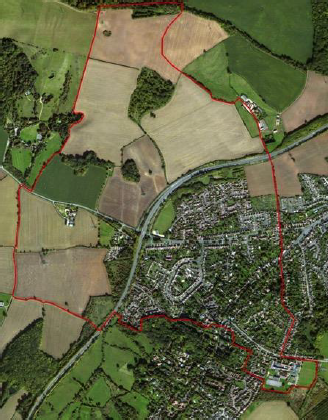
It comprises approx 11% of the land area of the whole parish, and has 43% of the dwellings, 42% of the people and a population of around 2,700. It is split by the A420 into roughly 40% residential housing and 60% farmland (in the north and west). The only non-residential buildings are a secondary school, farm buildings shop, community centre, church and sports pavilion.
Dean Court lies partly on the north-western flank of Cumnor Hill and partly in the valley between Cumnor Hill and Wytham Hill. The name is from the original Dean Court Farm, of which only really the farmhouse survives.
The most comprehensive view of Dean Court is from the Singing Way in Wytham Woods, part of the parish boundary. The photograph shows most of the residential area, although some of the housing along the valley is hidden by the trees and fields of Tilbury Farm, themselves part of Dean Court. For reference, the white buildings in the centre are Third Acre Rise.

This view and the fact that no dwelling is more than a kilometre from open green space and countryside confirms that Dean Court is a semi-suburban, semi-rural area.
Maps show that there was little development of Dean Court until after the First World War. Before that there were isolated farms (Dean Court, Tilbury, Busby’s, Stimpson’s, Red House, Deman’s and Hutchcomb’s being the main ones) as well as cottages and a few larger houses. Substantial development started in the 1920s and 1930s along Cumnor Hill and parts of Eynsham Road and a few side roads. The development was aided by the new bus services. Later developments are considered below: Pinnocks Way (1950s), Arnold’s Way (1960s), Deanfield Road (1970s), Fogwell Road and Orchard Road (1980s-90s), Tilbury Fields (2010s).
Dean Court, like the rest of the Cumnor area, is typified by spacious roads with house-separation/height ratio in range 4-8, many green spaces (private and public), low density housing and views. The average housing density for the populated part of Dean Court (East of the A420) is 14 dwellings/ha. The older roads (Cumnor Hill) are around 7-13 dwellings/ha and developments from 1950s – 1990s around 20-25 dwellings/ha. Tilbury Fields and some other small recent developments are over 40 dwellings/ha and road widths there are comparable with building heights. It is thus entirely out of character with the Dean Court as a whole.
Plots are commonly large rectangular shapes often orientated perpendicular to the road on main roads, such as Eynsham Road and Lower Cumnor Hill, with smaller variated plots accommodating curvature or gradients in later curved and cul-de-sac estate layouts.
The lowest-lying parts of Dean Court are liable to flooding, which is worsened by housing developments in Dean Court and on the slopes of Cumnor Hill.
i. Eynsham Road
Eynsham Road
General Character Description
The Dean Court part of Cumnor Parish developed along both Eynsham Road and Cumnor Hill in the 1920s and ‘30s as a more organic ribbon of large detached houses of mainly unique design in generous plots. The most common plot arrangement is predominantly linear along the main road with buildings facing the road. As a result the area has a suburban residential character of moderate density with a pleasing balance between buildings and gardens or open space but with a varied 1930s architectural character.
Given the size of these houses and the money invested in them as desirable homes outside the city, they are generally of a high architectural quality. Houses are generally set well back from the road with green garden boundaries and landscaped grounds to the front providing a green environment, with an informal character and high level of tree cover. Scattered throughout the area are remnants of much older development, including Dean Court farmhouse, which retains elements of the 13th century building that belonged to Abingdon Abbey and along Eynsham Road, old (often thatched) cottages and later, brick built cottages. This part of the area has a general low scale of development restricted to two storeys with attractive views out to the countryside seen over rooftops or from the peripheries of the area, including the narrow rural lanes and old footpaths.


Plot ratio diagram
The graphic demonstrates Eynsham Road retains a pleasing balance between buildings and gardens or open space with buildings covering no more than a quarter of plot space at a maximum of two storey heights.
Key Positive Character Features:
Spaces
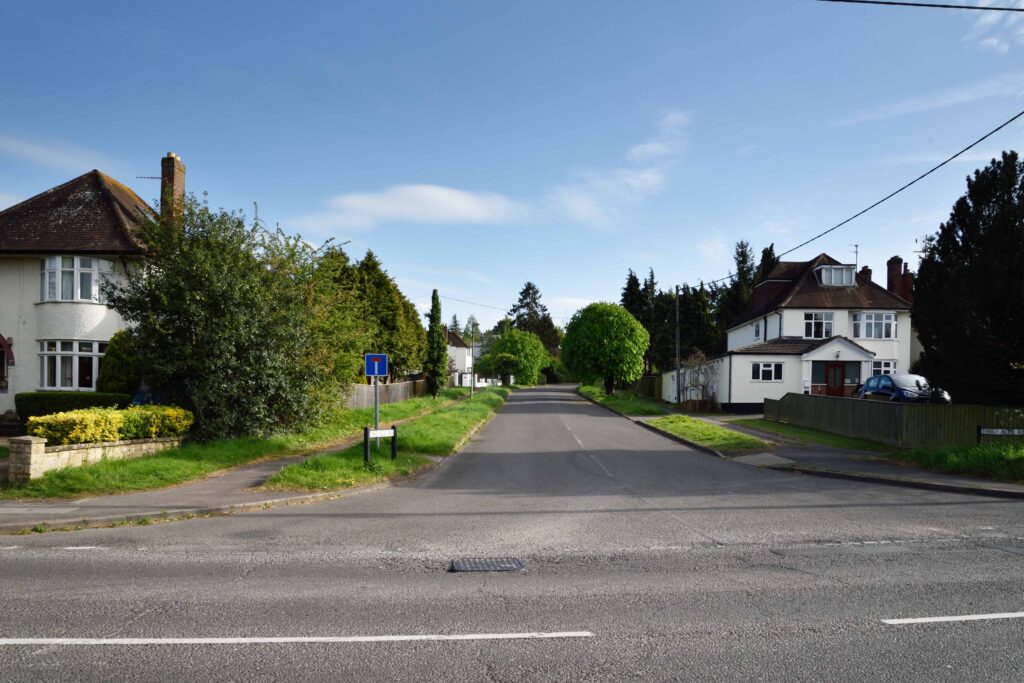
The two main roads running through this character area (Cumnor Hill and Eynsham Road) are generally wide with long sweeping curves and in places grass verges. This creates long, open and light spaces bounded by green hedgerow boundaries, with tall trees providing occasional vertical emphasis and, in places, areas of more enclosed space. Even where there is denser woodland beside the roads the area feels light due to the generous width of the road.

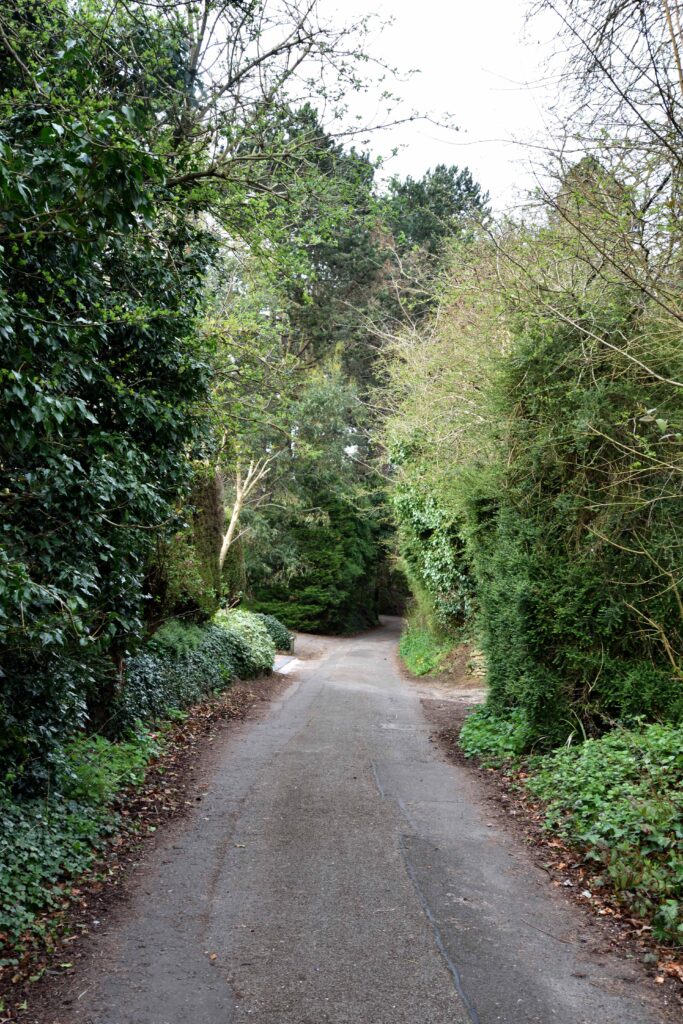
Narrow country lanes and footpaths (principally Cumnor Rise Road leading through to Tilbury Lane) provide a strong contrast and help to illustrate the earlier history of the area before the new turnpike road cut across the older field system. These lanes are generally darker, with trees arching over and creating shade. Road surfaces are generally plain black top, often without formal kerbs creating an informal feel that is a natural successor to the beaten earth roads of the historic landscape and helping to maintain the semi-
rural character.
Houses mostly stand well back from the road (providing privacy for residents) with spacious front gardens that provide an attractive setting to the houses but also add considerably to the openness and greenness of the road, giving exceptionally wide frontage-to-frontage distances. Spaces between buildings are also generous, contributing further to the low-density character of the area. The low front garden boundaries, generally hedges or low walls, allow views to front gardens, making an important contribution to the openness of the area (and making a contribution to security by allowing passive surveillance of property from the surroundings). The housing steps up Road the hill, with the scale of development varying between one and two storeys contributing to the informality of the area and allowing views out to the countryside over the rooftops and woodland from high areas.
Buildings
The area is entirely residential. As such, the architecture is domestic, formed almost exclusively of detached houses of between one and two storeys. The buildings include examples built throughout the 20th century but with a strong
presence of 1920s and ‘30s architecture, which make an important contribution to the area’s historic character. The range of designs includes references to the Arts and Crafts’ and Vernacular Revival Styles, using a mixture of vernacular materials that provide a rich texture which complements the scatter of much older buildings, especially along Eynsham Road. There are also some outstanding examples of modernist architecture in Third Acre Rise. The brick houses on Eynsham Road provide evidence of the former settlement of Botley Pound, being constructed with locally-produced Chawley bricks and tiles.

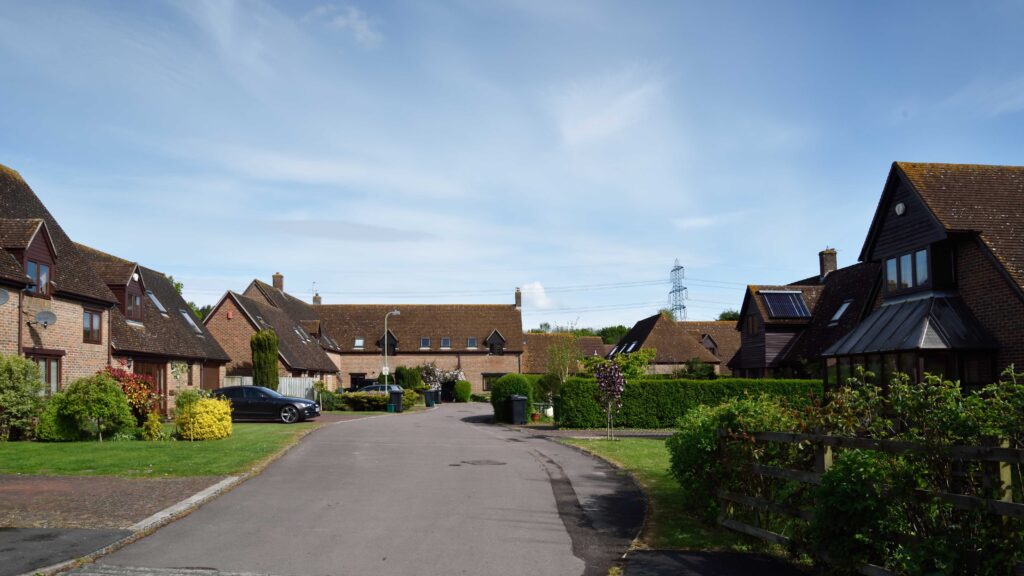
Generally the materials used are red brick and white or cream-painted render with plain tiled roofs often including hand-made tiles giving a more varied colour. Roof forms are highly varied but are generally pitched with a mixture of hipped and gable ended profiles. The retention of chimneys provides an interesting roofscape. Many houses retain their original windows (including a range of different 20th century styles).
Landscape
The green character of the area is very distinctive influencing the character of the suburb as a whole through the contribution of numerous mature trees and shrubs that are seen in views across the area. The hedges and grass verges that bound the road are an important feature of the semi-rural character of the area. The generous gardens of the area have afforded ample opportunity for tree planting including trees on the road frontage that frame views along the roads and at the rear of properties creating a green backdrop to wider views.
The steep slope of Cumnor Hill leads to some sweeping vistas over the rooftops and trees below to the wider countryside including Wytham Hill and the Thames Valley. The response of development to the slope of the hill, stepping down as individual buildings, which are placed to derive an aesthetic impact from positioning at the top of a rise, is a distinctive feature of the area’s character.


Views
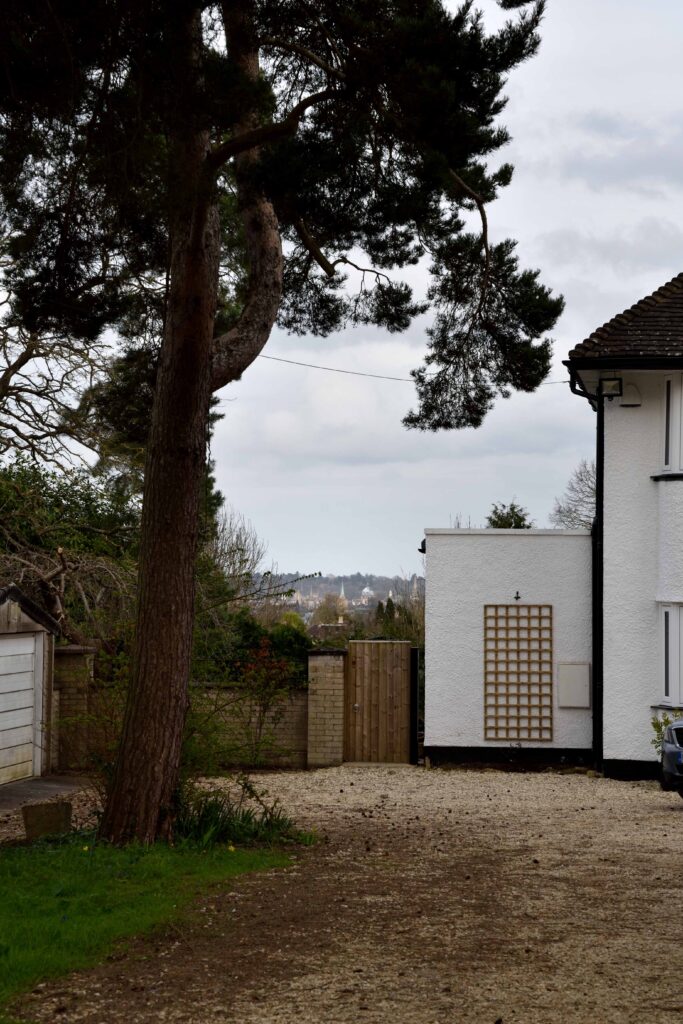
The long, gentle curves and tree lined character of the main routes gently leads the eye towards the vanishing point, taking in the green surroundings along the way and creates an unfolding a series of views along their length. By contrast, the narrow country lane at Cumnor Rise Road has more restricted views. There are many views out to the open countryside beyond the suburb from the area, including many glimpses between the widely spaced buildings. Some of these are expansive, whilst others are framed by trees.

Flooding
Parts of Eynsham Road are susceptible to flooding, especially following heavy rain. This is particularly true opposite Third Acre Rise, where water pours down and across the road and sometimes into front gardens, and could affect housing also.
Activity
The area is mostly quiet due to its residential use, with some busier times at the beginning and end of the day and particularly whilst children are arriving at and leaving the school to the south. It is noted that traffic activity on Cumnor Hill and Eynsham Road has steadily grown in spite of the A420 bypass, especially at commuter and school times.
Negative Features and Key Issues:
Spaces
There are a number of instances of single dwellings having been demolished and several houses being built on the plot. This is having a harmful impact on the essential character of the area with generous spaces and gardens contributing to the semi-rural feel to the area. The concrete road surface and absence of tress in some closes is harsh and unattractive against the rest of the area.
Buildings
Many houses have had windows replaced with models that do not contribute well to the design of the buildings. There a small number of new-build apartment blocks that are out-of-character and damage the overall character, for example 3-storey apartment blocks at 19 Eynsham Road, and 93 Eynsham Road.


on Eynsham Road
Landscapes
A number of Leylandii hedges stand out as negative features, creating tall visual barriers between the street and gardens.
Activity and Noise
Cumnor Hill and Eynsham Road are now busy traffic routes. Added to the A420 bypass at the western edge of Dean Court, there is now a constant background of traffic noise with some fumes when diesel vehicles climb the hill.
Views
The pylons that march across the across open countryside detract from the aesthetic quality of the views out from the character area.
ii. Pinnocks Way
Pinnocks Way
General Character Description
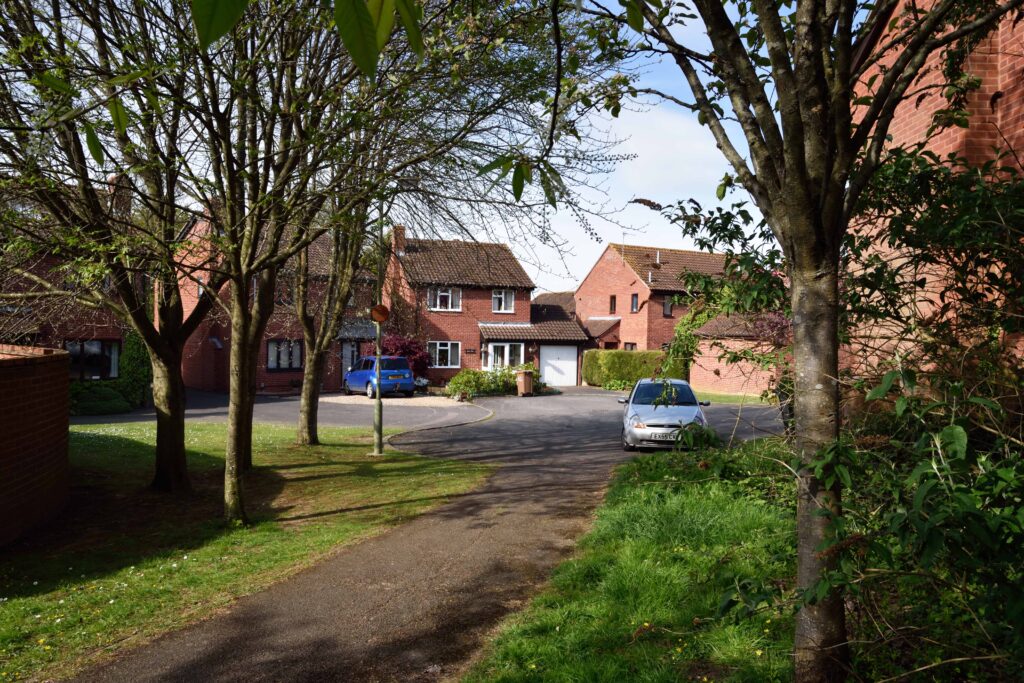
Pinnock’s Way is a moderately large residential estate built during the 1950s around a formally planned loop of road with several closes or cul-de-sacs. As a result, plots are organised around a loop road with radial cul-de-sacs and buildings facing the road. The uniformity of its buildings, generally two-storey semidetached houses, with bungalows in three cul-de-sacs, is a defining feature, albeit with variety provided by the use of painted render or red brick cladding. The estate has a pleasant green character with long areas of grass verge separating the houses from the road, many green front gardens with low boundary walls or higher green hedgerows and shared green space including an ‘island’ with tall trees at the start of the loop-road and a small park in the centre of the estate. The latter is also the location of the community centre. The green
spaces provide a balance to the buildings.
The estate has a comfortable low ‘human’ scale of one or two storeys, which provides an element of its coherent sense of place along with its tranquil, low traffic character and friendly residential community. Sitting in a hollow of Cumnor Hill the area is sheltered whilst attractive views to Wytham Hill and Hid’s Copse are seen between buildings and over their roofs. A minor erosion of character is seen as a result of variable upkeep of properties and the impact of car parking on-street and on the grass verges, as well as the loss of green garden space for on-plot parking.
Plot ratio diagram
A continued balance between buildings and gardens or open space with buildings covering no more than a quarter of plot space at a maximum of two storey heights.
Key Positive Character Features:
Spaces
The streets preserve the coherent layout of the estate as designed in the 1950s, with generous allowance for green space and gently curving roads that encourage slow traffic speeds and provide a comfortable sense of enclosure. The community area, including the park (with community centre) is located in a sheltered location in the centre of the oval loop road. The small cul-de-sacs have narrow entrances from Pinnock’s Way, which are favourable to pedestrians but have good lines of sight improving surveillance and security. Attractive green spaces include the island green near the shop, the long grass verges and the small park.
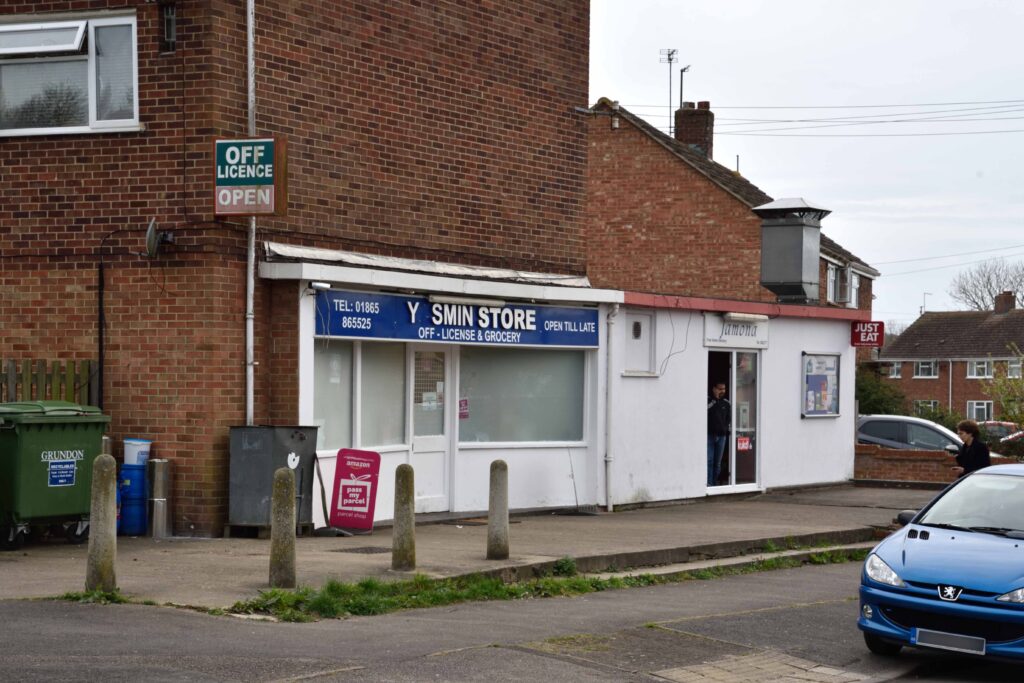

Gaps between buildings are broad enough to allow views through to greenery behind, including Hid’s Copse to the south. The breadth of the roads, set back of buildings front gardens and low scale of development ensures the area feels light and open whilst maintaining the sense of enclosure to the streets. Songers Close stands out for the shading of surrounding tall trees. The frontages have variable forms of boundary with low brick walls providing a good quality definition to private space, whilst allowing garden greenery to contribute to the overall attractiveness of the street-scene and hedgerows adding further softening and greenery. The longer back gardens are less apparent from the street but make an important contribution to the living environment for residents. Narrow pathways provide good routes for pedestrians up to Cumnor Hill, into the central
park, and onto Eynsham Road.
Buildings
The buildings have a consistent 1950s domestic character (albeit with the addition of a small shop and the new community centre), which unifies the estate as a single place. The houses wrap around the spaces, providing enclosure and defining the roads. They are instantly recognisable as houses, reinforcing the residential character of the area with simple forms, generally topped with pitched plain tile gable-ended roofs and occasionally with brick doorcases and flat hoods to front doors. Chimneys add some detail to the roofscape. The flexibility of the original buildings is demonstrated by several conversions into flats as well as the successful integration of extensions to side and rear and porches to front without noticeably affecting the overall character of the area.
Views
Views out of the area add to its green character and help to connect it to the surrounding countryside including Wytham Woods and Hid’s Copse.

Views of the townscape within the estate benefit from the uniformity of the architecture and green landscape in the street-scene contributing to the impression of an attractive harmonious and planned area.
Landscape
The estate sits in the side of a gentle slope with views over and between buildings to hills and woods. The contribution of the green landscape has been noted above. This is an important designed element of the estate that was incorporated to ensure it formed an attractive living environment for residents. Springs are found at various points on the hillside creating some natural wetland areas in back gardens and the park. Occasionally the aromas of the countryside penetrate to the estate. Some residents find this an evocative element of the area’s character providing another form of connection with the rural setting.
Activity
The estate is tranquil with a generally low level of activity and absence of through traffic, supporting the residential character and use. It is a safe feeling area, with frontages providing overlooking and surveillance. The park and soon to be completed community centre provide a focus of community activity along with the small shop, whilst the main sources of noise within the estate are children playing and birds singing.
Negative Features and Key Issues:
Spaces
The central green park is considered to be a very positive use of space but could benefit from tidying, including screening of the unsightly substation. The coverage of front gardens by hard-standing has helped to remove some parked cars from the street but overall is reducing the contribution of greenery to the street-scene. Providing parking spaces that include some greenery would be a good compromise. The narrow footpaths to the park and up to Cumnor Hill are relatively intimidating at night and could benefit from more regular maintenance as well as better lighting and signage to increase footfall.
Landscapes
The landform of the estate and the increasing areas of hard surface tend to channel rainwater into the streets and result in overflowing drains after heavy rainfall.
Views
The high number of cars parked along the streets detracts from the green and spacious quality of views creating a cluttered street-scene.
Activity and Noise
Depending on the wind direction traffic noise from the A420 or Cumnor Hill can be intrusive to the area’s otherwise tranquil atmosphere. The pressure for on-street car parking is very heavy including use by commuters and van owners. This is having a negative impact on the quality of the estate’s attractive grass verges.
iii. Eynsham Road West
Eynsham Road West
General Character Description
The main part of Eynsham Road is covered in the “Eynsham Road” character assessment. The western end of this road either side of the A420 bridge is sufficiently different to warrant a separate assessment.
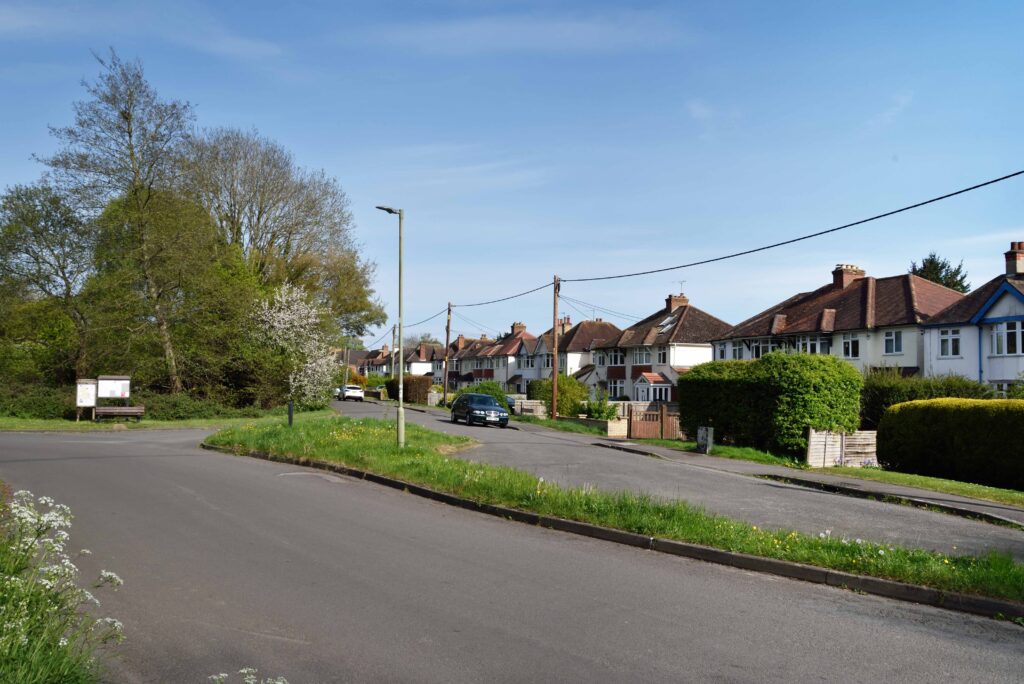
With the exception of Marley Close and Nobles Lane, the houses are still relatively well spaced out with wide roads and consistent with the character of the rest of Eynsham Road. However, at the western end there are only houses on the southern side of the road with a linear frontage pattern, varying in character as one travels westward. This part of Dean Court is typified by space and views over farmland.
Plot ratio diagram
A pleasing balance between buildings and gardens or open space with buildings covering no more than a quarter of plot space at a maximum of two storey heights.
Key Positive Character Features:
Spaces
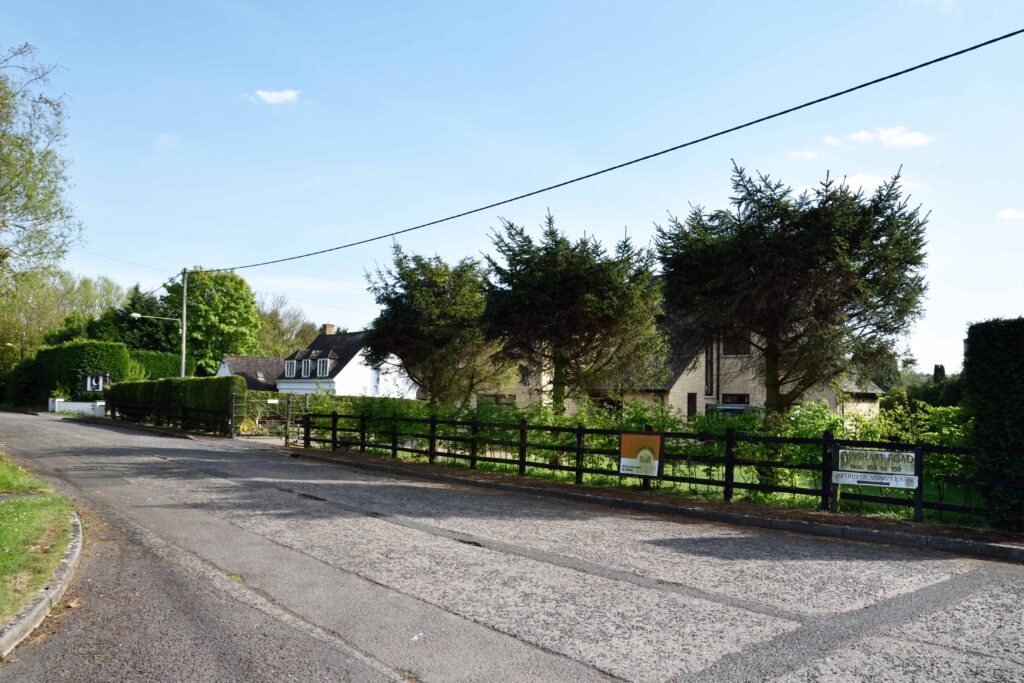
This area starts with housing only on the southern side of the road. Here Eynsham Road is very wide with large green verges, trees and a service road (the original road), giving a great sense of space. The spaciousness is assisted by reasonably large gardens with low fences. The westernmost part is exceptionally spacious lying entirely on a service road, with views of trees and fields, and large spaces between houses.
Buildings
The area is still entirely residential. There is a mix of houses, at first a line of 1930s semi-detached properties leading to large detached properties the western side of the A420. Materials are a mix of traditional, mostly cream rendered on the main road, some red brick apartment blocks that are well disguised as large houses. Marley Close (early 2000s) is also red brick. Nobles Lane has a few very old thatched cottages, beyond which is a mobile home park (Tudor Court).


Landscape
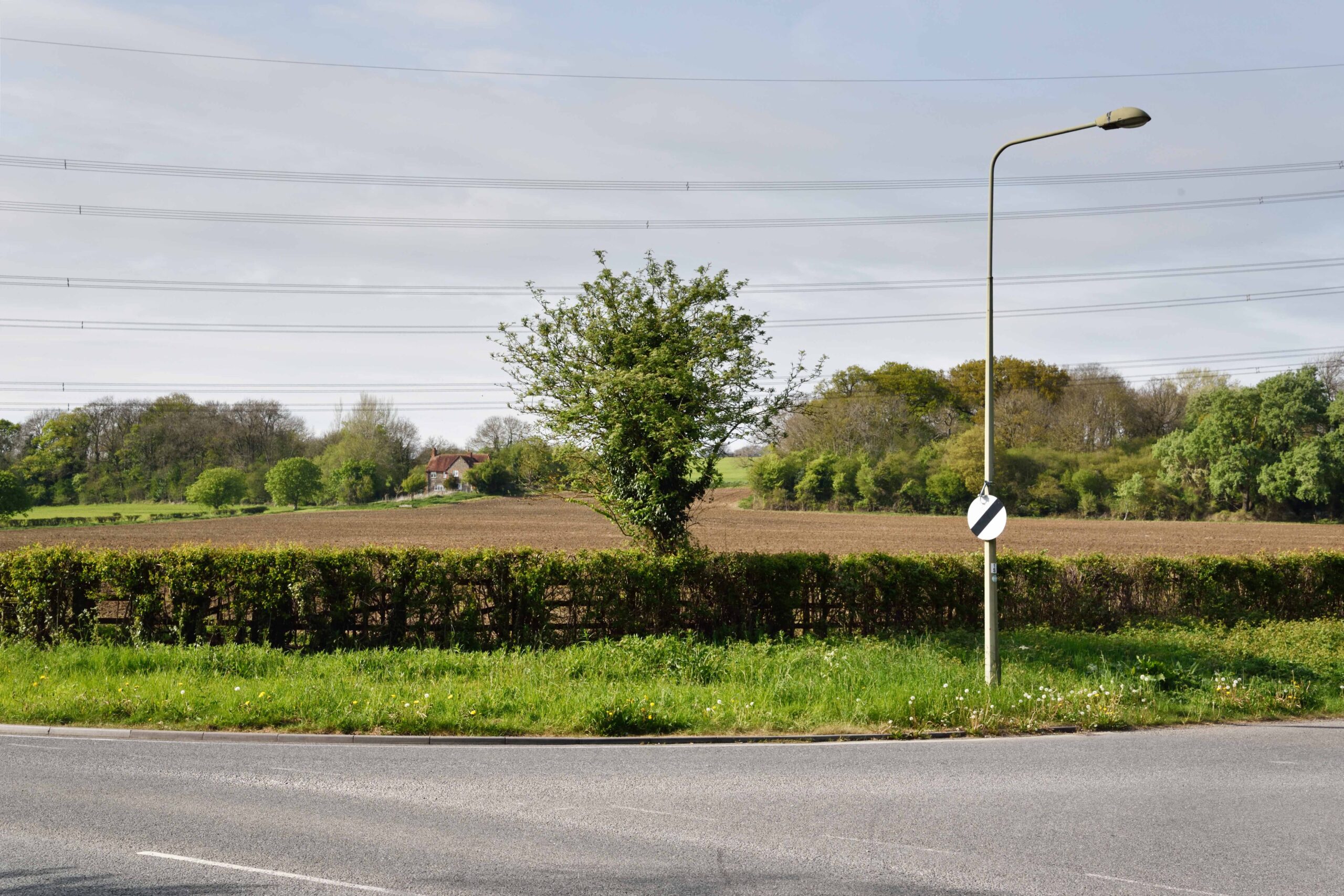
The green character of the area is very pronounced on the Eynsham Road itself, with numerous grass verges, mature trees and hedges from the original road boundary and shrubs. The mature front gardens have trees and shrubs on one side, while the other side is a sports field with high hedges, with open farmland on the western side of the A420. The presence of the A420 will be commented on below. There is plenty of daylight and some tree shade in most of this area. Tudor Court is landscaped with colourful gardens that soften the outlines of the homes.
Views
There are views over farmland, of isolated farm buildings, backed by copses and Wytham Woods. The other way there are wide-open views along the tree-lined Eynsham Road.

Flooding
The part of Eynsham Road West closest to the A420 is susceptible to flooding, especially following heavy rain. There are culverts to prevent flooding but these sometimes get blocked and become ineffective.
Activity
Except for the A420 and its slip roads, The area is mostly quiet due to its residential use, with some busier times at the beginning and end of the day and particularly whilst commuters and children are travelling.
Negative Features and Key Issues:
Spaces
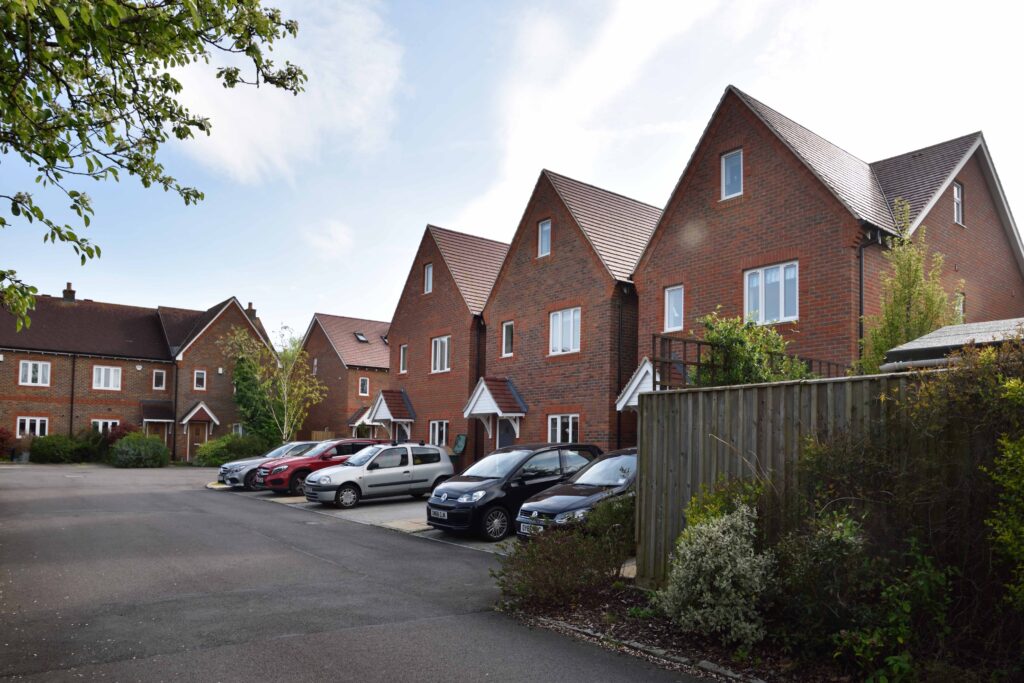
The only parts with poor space are (a) Marley Close where the most recent houses are built very close together, (b) Tudor Court, but mitigated by the gardens.
Buildings
The only negative comment on the main road is that extensions have in some cases spoiled the layout of the houses. Tudor Court comprises mobile homes that are different in character from the rest of the area.
Landscapes
The presence of the A420, its bridge and slip roads somewhat spoils the landscape in this area.
Views
The main negative is the dominance of the A420 in the foreground of many views.
Activity and Noise
This part of Eynsham Road is a relatively busy traffic routes. The A420 bypass and its slips roads contribute a substantial noise and fume background especially as it is raised on a bridge.
iv. Deanfield Road
Deanfield Road
General Character Description
Deanfield Road is a 1970s development of about 70 houses on the north side of Eynsham Road that is different in character from Eynsham Road. It will therefore be assessed separately. It comprises 3-bedroom semi-detached houses, with a frontage of larger detached houses on Eynsham Road. It has an overall straight grid layout with buildings facing the road.
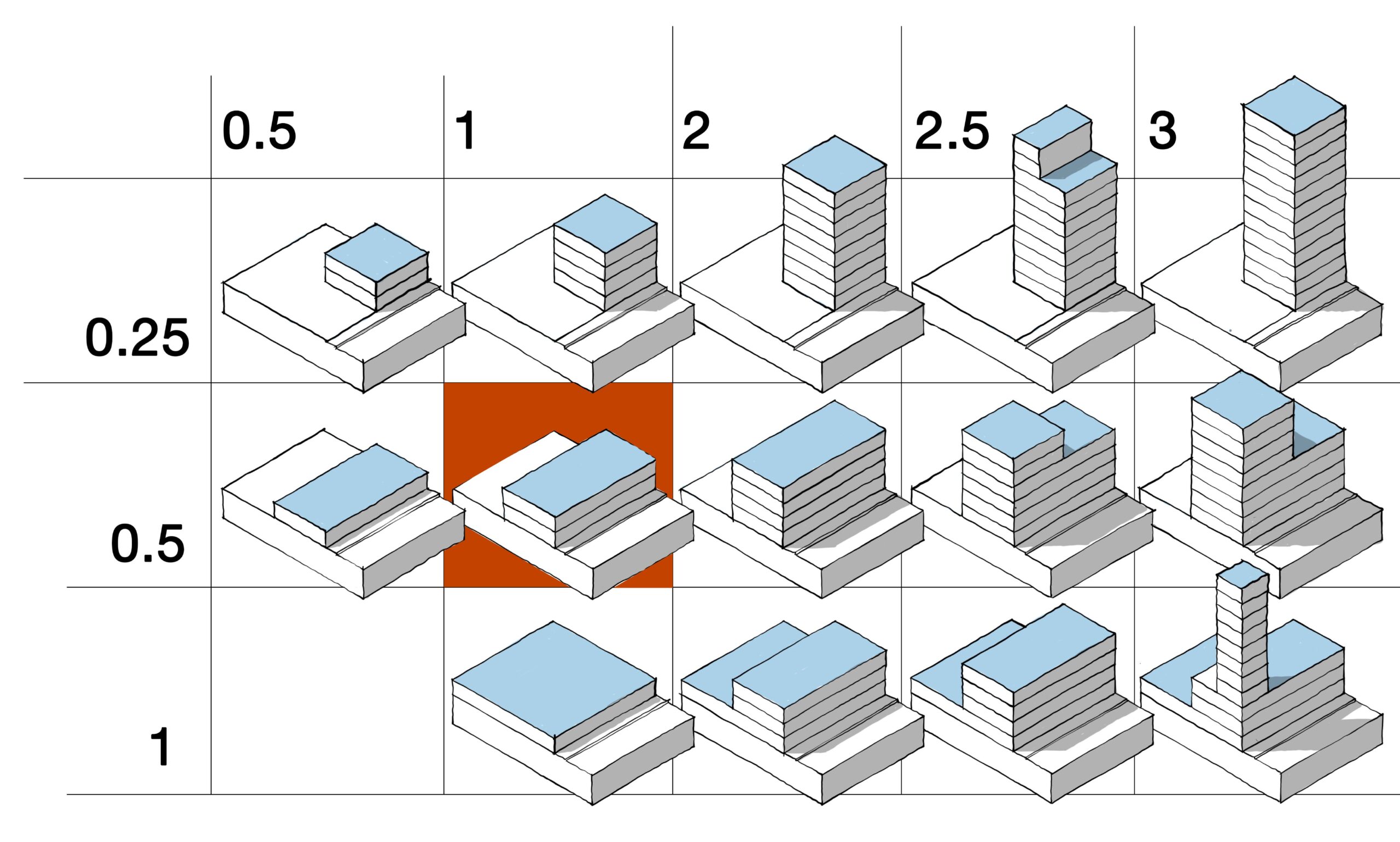
Plot ratio diagram
Slightly higher density with approximately half of plot covered by buildings but retaining a maximum of two storeys.
Key Positive Character Features:
Spaces
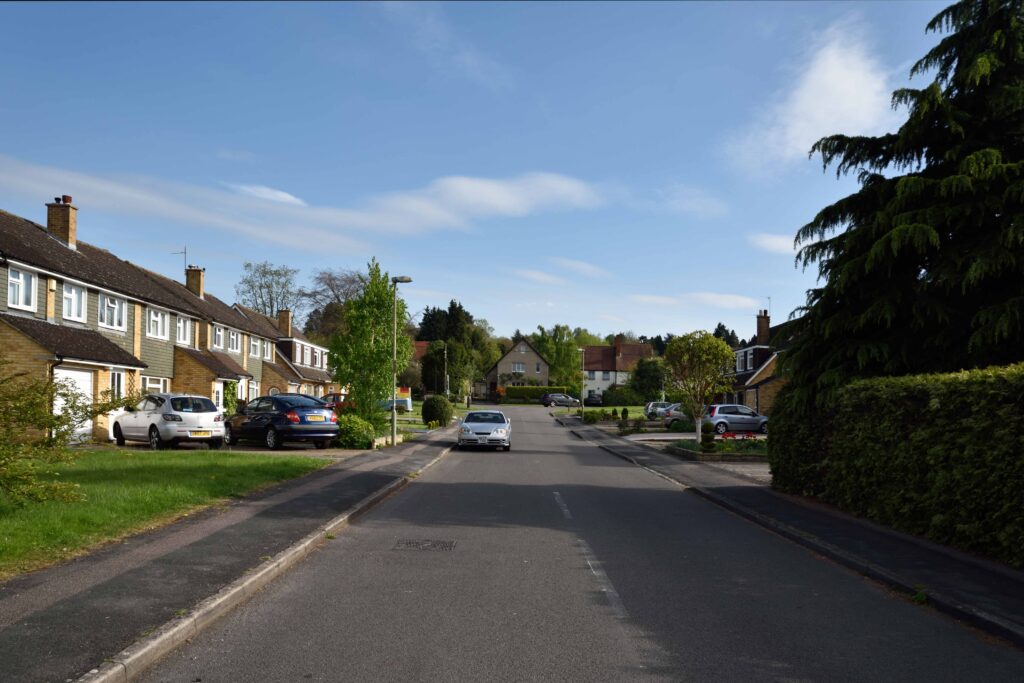
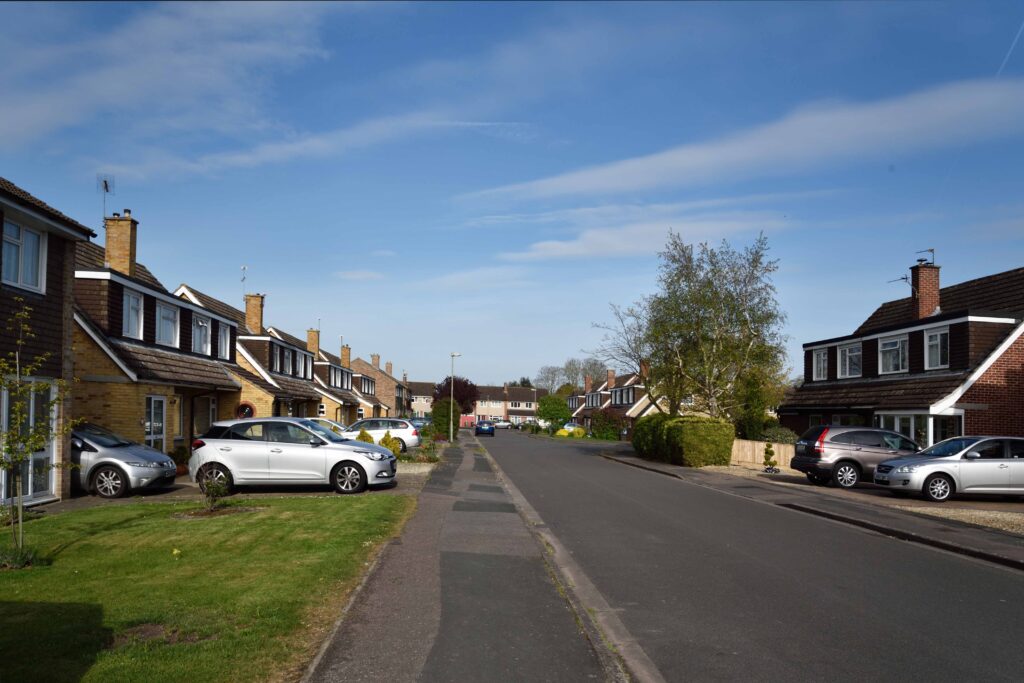
Like Eynsham Road, the Deanfield Road development is laid out as a series of straight roads to be spacious, with wide pavements and verges, houses set well back but quite close together. Semi-open plan front gardens and drives add to the sense of space. The houses that front onto Eynsham Road have long open plan front gardens largely laid to lawn, which give a slightly out-of-character 1970s feel to a section of Eynsham Road.
Buildings
Mostly 3-bedroom semis of two principal designs, predominantly yellow/grey in colour. Each house has a reasonably deep plot, and houses and gardens are in the main well-maintained. The overall feel is of rectangular regularity. The 4-bed houses at the front are of similar design to one another and similar colour.
Landscape
The houses have tidy gardens with young trees and shrubs and lawns. The open plan design of the frontages gives a particularly open nature to the local landscape.
Views
Aspects are restricted to within the space and dominated by the regular but spacious layout of the houses and gardens. There is little shading.
Flooding
Parts of Deanfield Road are susceptible to flooding, because this is one of the lowest parts of the Ward.
Activity
Deanfield Road is a quiet cul-de-sac with only footpath access to the large Fogwell Road estate behind.
Negative Features and Key Issues:
Spaces
The space although good tends to be rather regular and angular, without mature trees to soften the edges.
Buildings
The greyness, regularity and repetition is not to everyone’s taste.
Landscapes
Deanfield Road is generally less green than the Cumnor Rise/Eynsham Road area it adjoins, presumably because they were cleared by the developer. There is a dearth of larger mature trees and higher level naturally growing greenery.
Views
As Deanfield Road is slightly lower than the roads around it, there are no distant views, aspects being restricted to within the space and dominated by the regular but spacious layout of the houses.
Activity and Noise
–
v. Orchard Road and Fogwell Road Estates
Orchard Road and Fogwell Road Estates
General Character Description
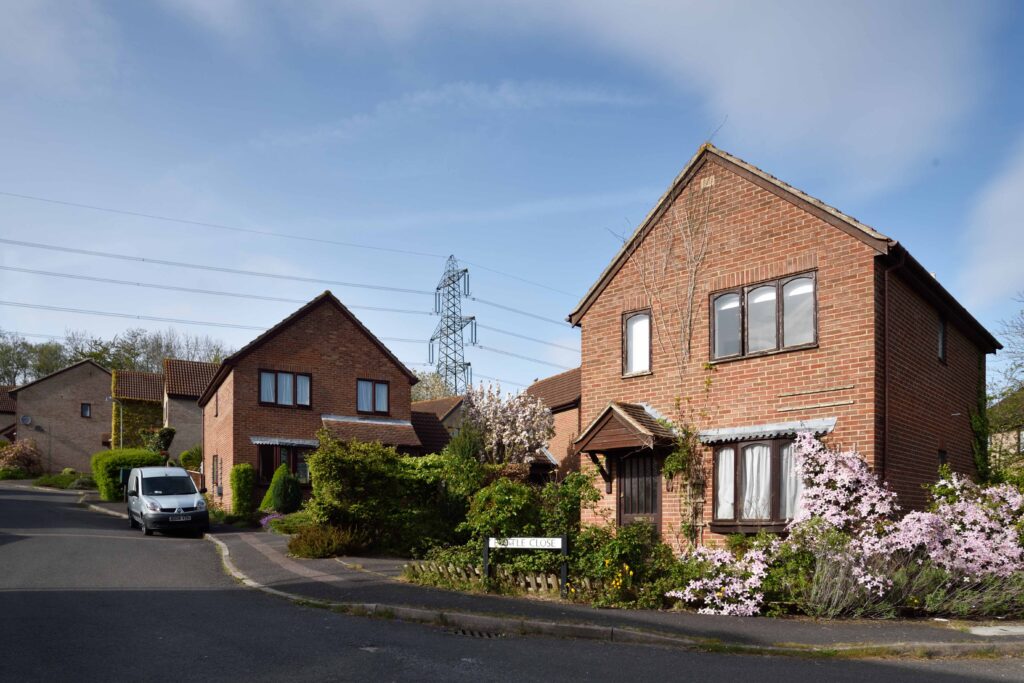
Both Orchard Road and Fogwell Road estates are accessed from Eynsham Road. They were a major development in the 1980s and are completely different from any other area of Dean Court, being comprised between them of some 300 red brick houses, many of which are detached. As they were built at about the same time and are broadly similar in character they will be considered together.
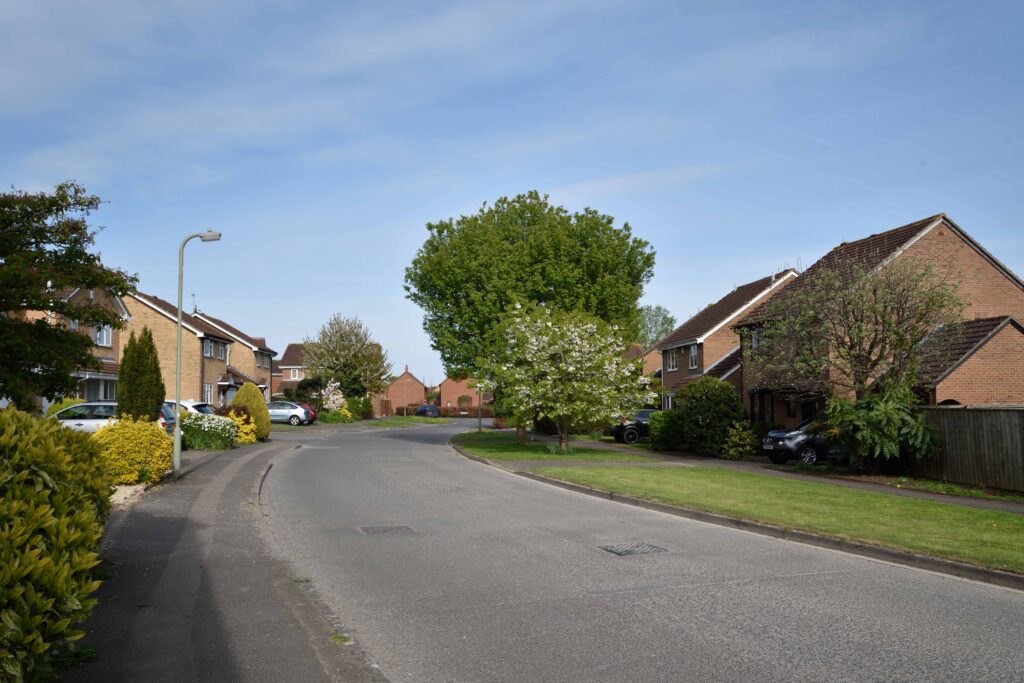
Unlike many earlier developments, these are comprised of curving main roads and lots of closes and side roads, with houses not in a strongly regular pattern but irregular, staggered building frontages with non-uniform orientation, giving a softer feel, especially where there are green spaces and trees. This layout of closes gives a stronger sense of local community than is often the case.
The houses on both estates are set a little back from the road with mainly open plan front gardens, many of which have been partially converted to additional car parking space. Even so, there are often cars parked in the various closes. Both are reasonably spacious and green environments especially as many of the newly-planted trees and shrubs are now reaching maturity. History is represented by part of the footpath from Chawley to Dean Court Farm than runs through the centre of the Orchard Road estate. The estates feel peaceful and in touch with the countryside they border.

Plot ratio diagram
Slightly higher density with approximately half of plot covered by buildings but retaining a maximum of two storeys.
Key Positive Character Features:
Spaces
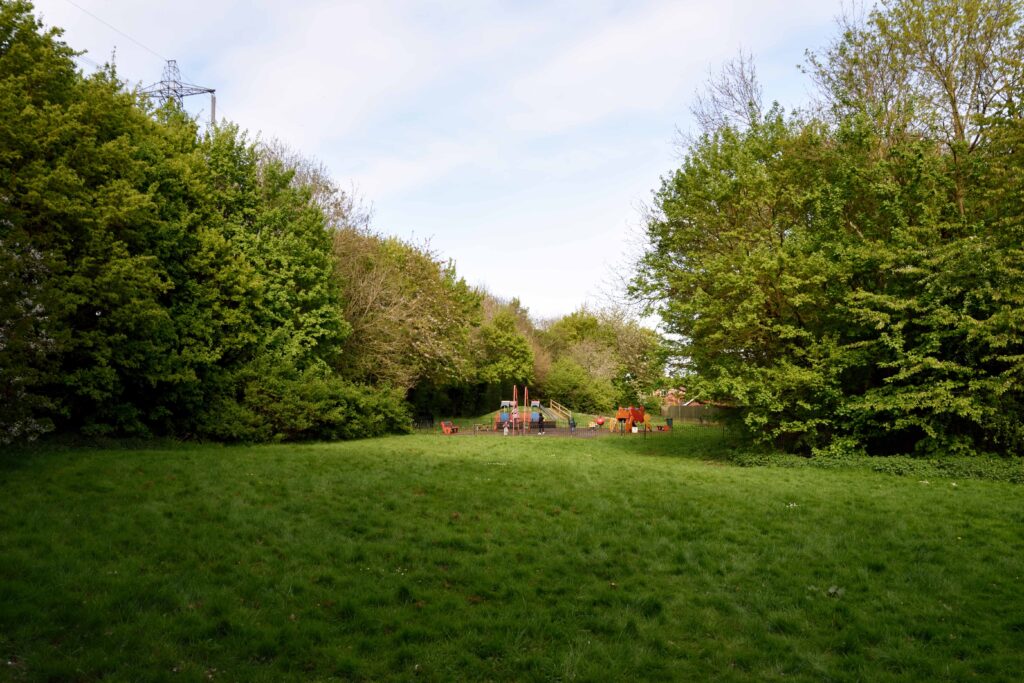
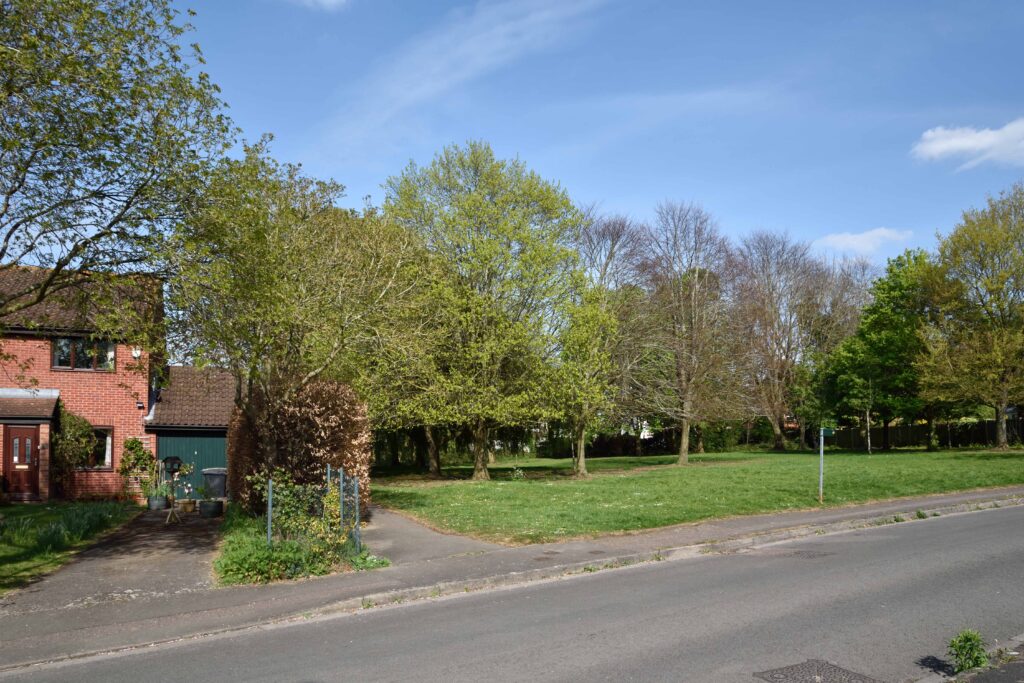
Houses are set back a little from the tarmac and block paving roads, which have either verges or pavements, and there are open or semi-open front gardens. This gives a good sense of space especially on the main Fogwell and Orchard Roads themselves. All the roads are winding which together with the trees and shrubs, adds to the overall suburban community atmosphere. The roads are relatively quiet and traffic free, but some parked cars. There are snickets and footpaths between roads and closes, with trees and evidence of original field boundaries, reminiscent of green lanes.
Buildings
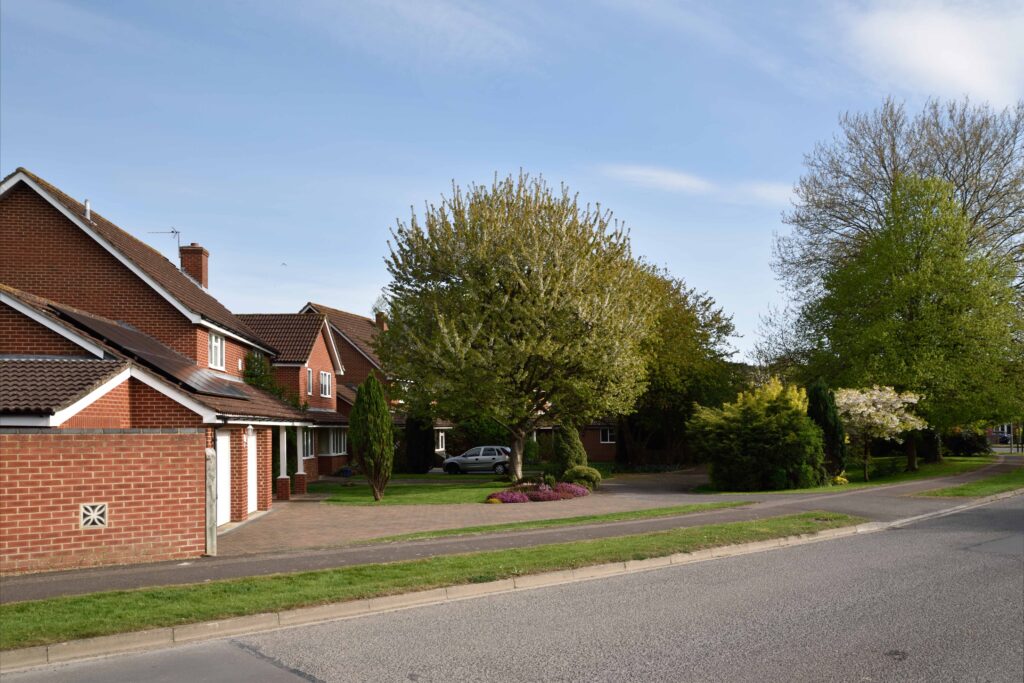
The area is entirely residential (apart from St Andrew’s church). The architecture is domestic, formed mostly of detached houses of two storeys. There is a smaller number of semi-detached and terraced houses. The style of building is red brick under sloping dark tiled roofs. There is a range of designs on both estates, mixed up to certain extent to avoid too much regimentation. Spaces between houses are reasonably wide and variable, and the condition is good. Many homes have been extended and otherwise improved, using in a manner consistent with the dominant style.

Landscape
The houses have typical suburban gardens, typical of the 1980s, with trees and shrubs giving plenty of green views and backdrops, especially when combined with original mature trees, and the woodland at the back of each estate. There is good daylight with occasional shading by trees. Of particular note are the good number of public green spaces within each estate, some of which are suitable for games and leisure. This all give a greenness to the two estate which fits well with the overall character of Dean Court.

Views
Very typical are the alternating views of houses and greenery along the winding roads and closes. Both estates have backdrops of woodland: for Orchard Road it is Hids Copse, while for Fogwell Road it is the woods alongside the A420, backed by Wytham Woods.

Activity
The area is mostly quiet due to its residential use.
Negative Features and Key Issues:
Spaces
Car parking on roads in various places because of lack of parking space in properties.
Buildings
–
Landscapes
–
Views
The nearby electricity pylons detract from the views from the Fogwell Estate.
Activity and Noise
A lot of road noise from A420, especially along Orchard Road which it adjoins. Farmyard smells at certain times of the years mingle with the scent of spring vegetation.
vi. Tilbury Fields
Tilbury Fields
General Character Description
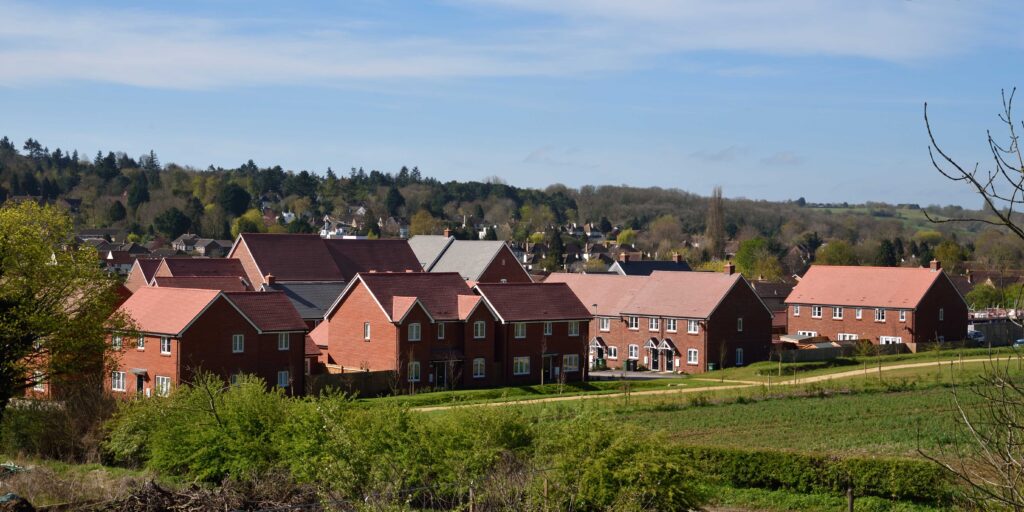
Tilbury Fields is a recent development, not yet finished, of some 150 homes split equally between Cumnor and N Hinksey parishes. The whole, very compact development with a perimeter block layout has a single point of vehicular access through Fogwell Road. There is pedestrian and cycle access to Hazel Road in North Hinksey parish.
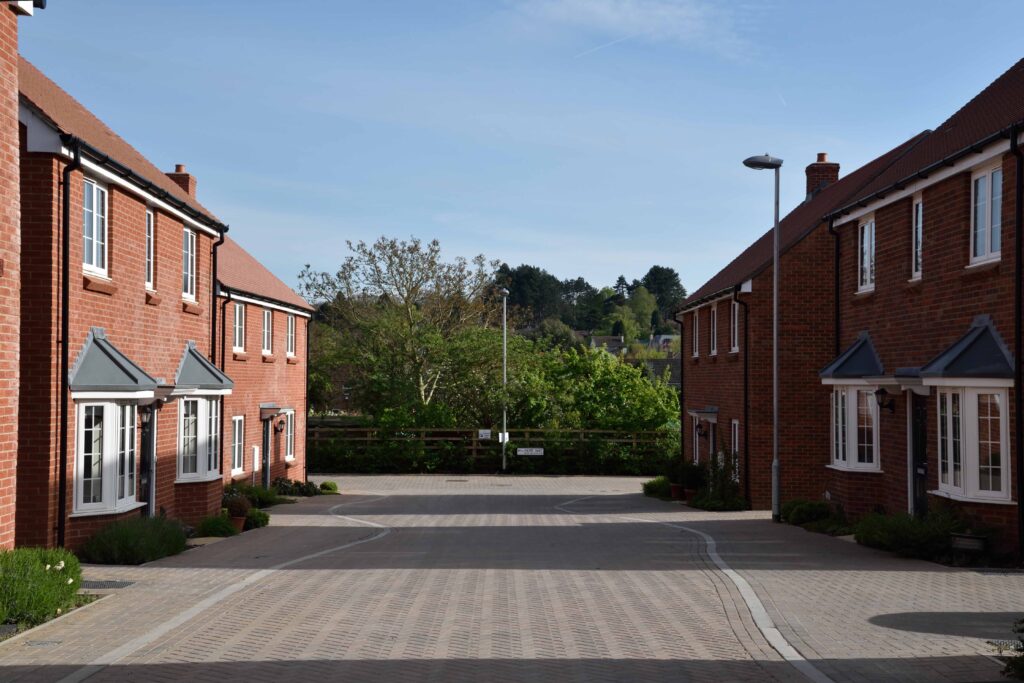
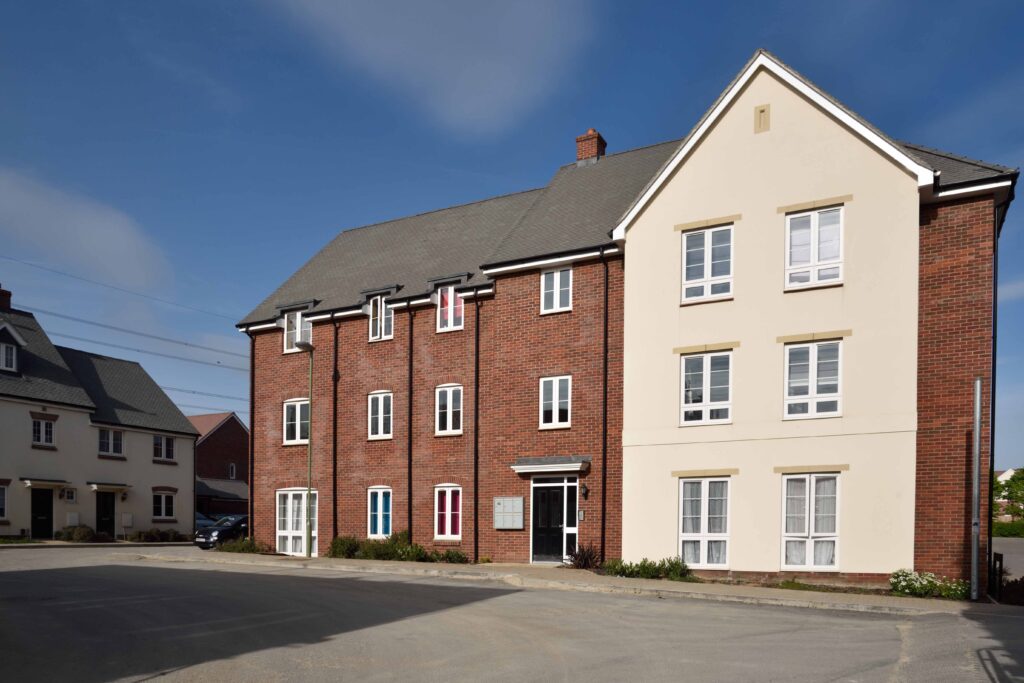
It has the highest density housing in Dean Court, and includes much taller buildings than anywhere else for the blocks of flats that comprise much of the “affordable housing” in the development. In addition there are terraced, semidetached and larger detached houses. None have front gardens and the back gardens are small. Similar to the Kimmeridge Road development off Cumnor Hill.
Plot ratio diagram
Slightly higher density with approximately half of plot covered by buildings but retaining a maximum of two storeys.
Key Positive Character Features:
Spaces
Some central blocked space for access and car parking relieves the lines of buildings.
Buildings
The area is entirely residential with the houses completely dominating the space. A variety of housing sizes and design. 2 and 3 storey. Building materials are traditional, either red brick of cream rendering under dark tiles. Pitched roofs with some dormers.
Landscape
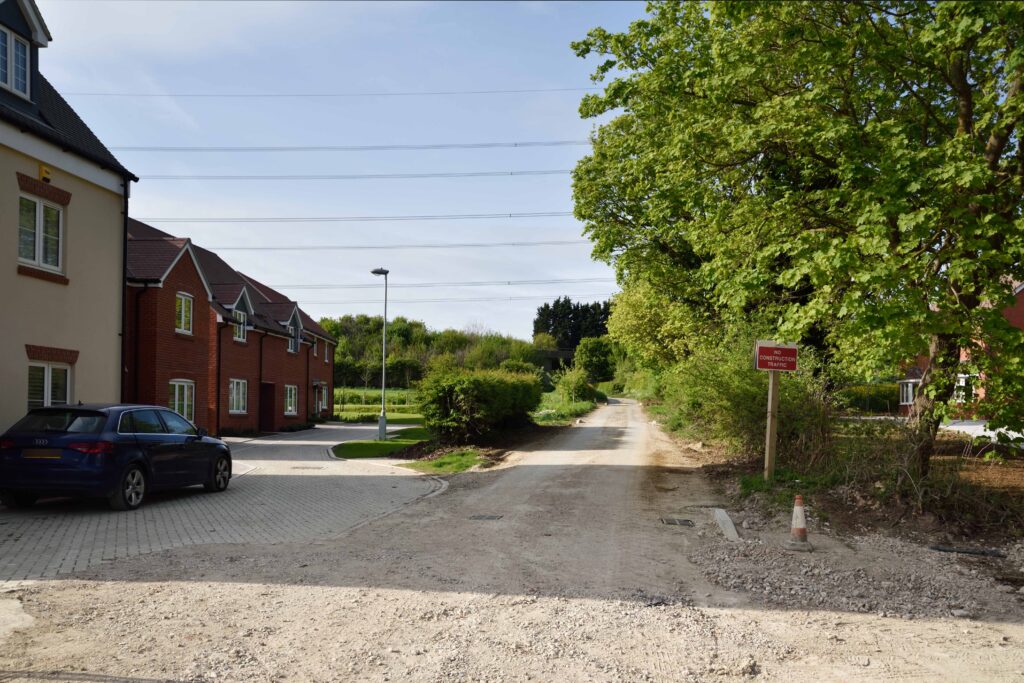
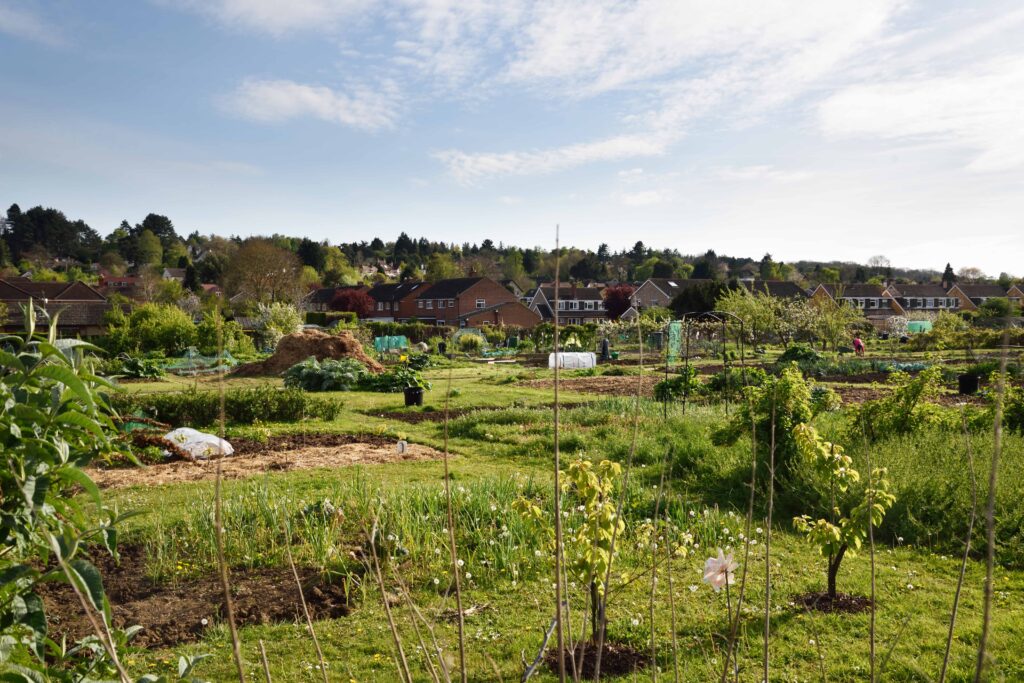
Development is bounded by green space. Mature trees in the distance and along Tilbury Lane beyond the allotments. Some green landscaping has been done on the northern edge between the houses and A420 trunk road. There is one very small green play area.

Views
The northern boundary houses have views over green space to the A420 while the southern boundary houses look over allotments.
Activity
The area will be quiet due to its residential use.
Negative Features and Key Issues:
Spaces
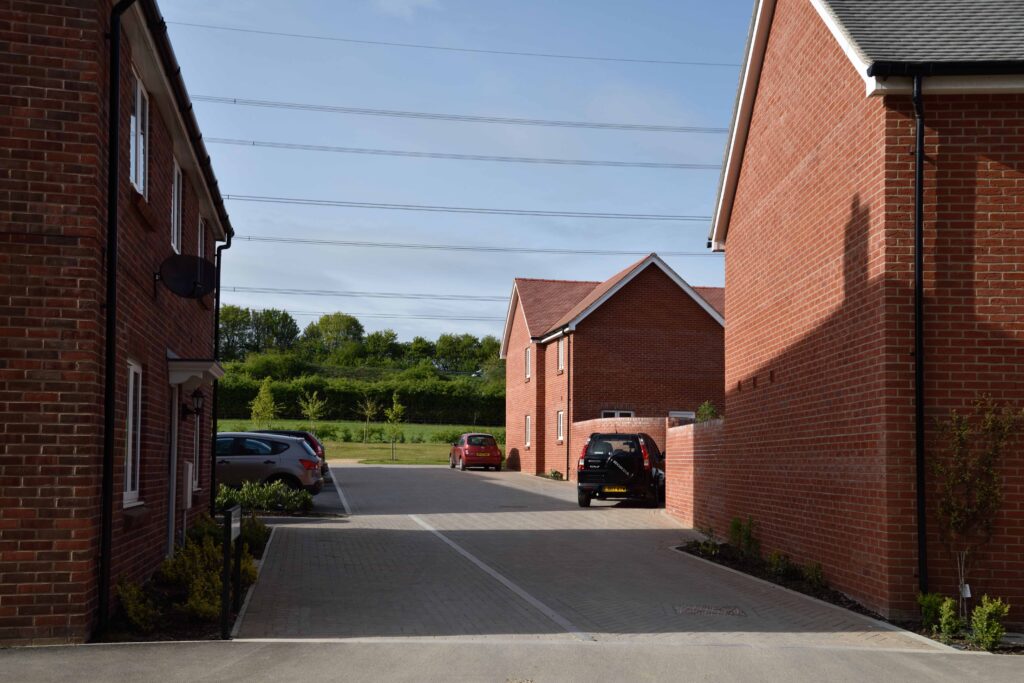
The block-paved roads are quite narrow and straight, accentuated by the lack of pavements for the most part, the houses forming the boundaries of the roads without gardens or frontages. There are very few gaps between houses or along road sightlines. No public space internally apart from parking space, but external space for the larger houses on the northern and southern borders. When completed there are likely to be many cars parked.


Buildings
A common theme of rectangularity. The tall pitched roofs of the blocks of flats make these dominant over the local landscape. No chimneys to relieve the horizontal lines.
Landscapes
No greenery within the space at present. The lack of beds of soil along the streets and the small gardens will make it difficult to introduce much green to the landscape which is dominated by the vertical and horizontal lines of the buildings.
Views
No views within the development, not even through gaps between houses, so slightly claustrophobic especially at present without trees or shrubs to relieve the angularity. The nearby electricity pylons detract from the views from the Fogwell Estate.
Activity and Noise
A lot of road noise from A420. Hazardous farm traffic through centre of estate, but likely to be relocated if planning consent for separate access given. Farmyard smells at certain times of the years.
vii. Third Acre Rise
Third Acre Rise
General Character Description
This is a predominantly 1930s development with detached houses sited around a Y-shaped cul-de-sac. The tree-lined road occupies the southern slopes of Cumnor Hill and the land rises quite steeply from Eynsham Rd. Whilst it shares many characteristics of Eynsham Rd and Cumnor Rise, this development is unique in that it is a very carefully designed composition of medium-sized houses of similar but varied design, in generous plots with buildings stepped to adapt to topography and optimise countryside views, each having at least a third of an acre, hence its name. A restrictive covenant on the land conveyance of 1936, not allowing more than one house on a third acre plot sought to ensure that this distinctive character was not compromised. The development was interrupted by the war and several houses date from the second half of the twentieth century.
Because of its distinctive character, the area was considered for conservation area designation several years ago but this was not pursued, principally through lack of resources. In the meantime, Policy DBC5 in the Cumnor Neighbourhood Plan identifies land at Third Acre Rise and Lower Cumnor Hill as an Area of Special Character.
Plot ratio diagram
Very low density rural/edge of settlement development with buildings covering no more than a quarter of plot space at a maximum of two storey heights.
Key Positive Character Features:
Spaces
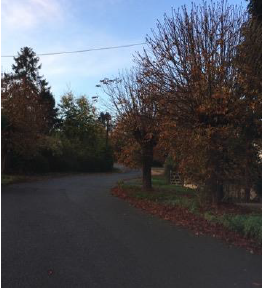
Each house sits more or less centrally within its third acre plot and is set well back from the road. This creates wide gaps between the buildings, which is generally greater at roof level as the hipped and pyramidal roofs create wider gaps above eaves level. Each house is sited so as to address a gap between the houses opposite in order to avoid direct overlooking of house and garden and, making use of the topography to afford views to the landscape beyond. The generous width of the road and footway, including a grass verge along the lower part of the road, contribute in a very spacious feel to the development.
Buildings
The majority of buildings are strongly 1930s in character, though not they uniform in design. There is some variety, with a number of designs repeated and some interesting modernist examples with flat roofs. Houses are mostly two storey, with the modernist houses having a small third storey and some are two and a half storeys. The mix of building materials includes brick, concrete and render with plain tile roofs. Whilst some houses have been extended the original house is usually legible and the overall character retained. There are some exceptions, principally those houses constructed in the second half of the twentieth century.
Nevertheless, these respect the overall scale, siting and traditional form of the prevalent character. The buildings are all residential.


Landscape
As with neighbouring areas the green character of the area is very pronounced. As well as the grass verge, mature trees line the footway along the length of the road, planted as part of the original development. Most houses have front gardens open to public view, many containing mature trees and hedges which make a positive contribution to the green character of the road.
Views
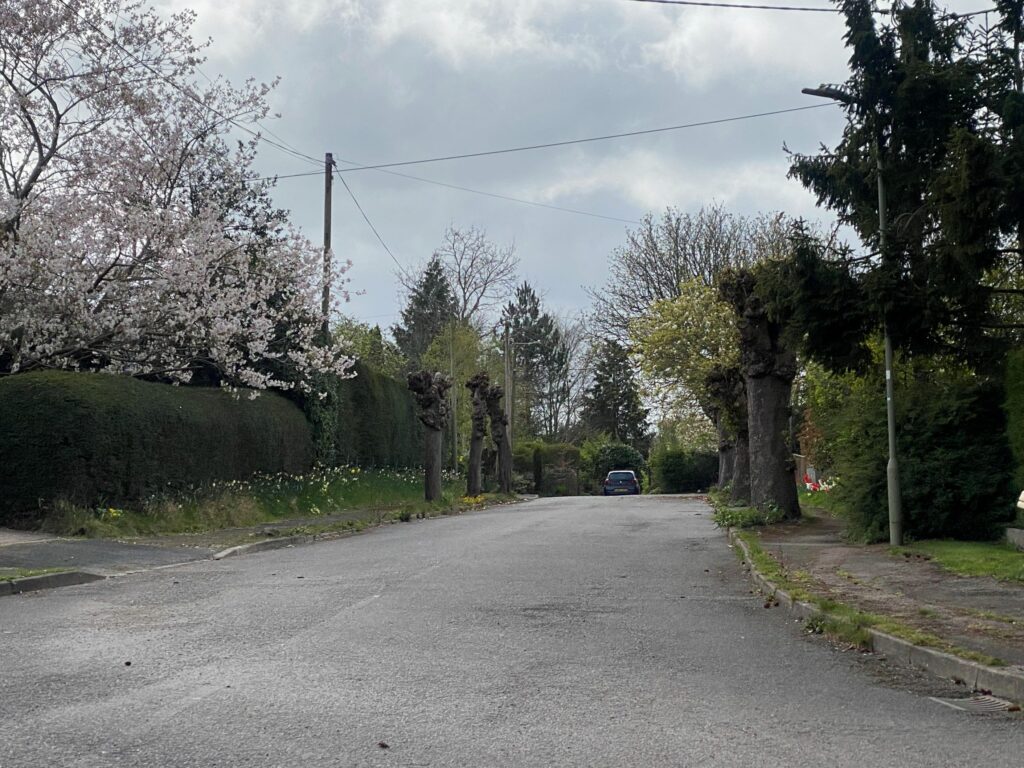
In common with much of the rest of Dean Court, there are striking views of open countryside, including farmland and Wytham Woods, from every part of Third Acre Rise. The rise in the land, the careful siting of houses and the typical roof design all contribute to securing this. This is an important element in the character of the area and one which has considerable amenity value. The views up Third Acre Rise from Eynsham Rd are principally of the trees and hedging lining the road. The curve part way up the hill terminates the view to the south whilst opening the view to the west along the western arm of the cul-de-sac. Higher up the road, the view is terminated by a one and a half storey house set against a backdrop of the dense wooded slopes of Cumnor Hill.
Activity
The road is entirely residential and for the most part quiet. There is very little locally generated noise. However, traffic noise from the A420 can be very intrusive, discussed below.
Light and Dark
Despite mature trees along the road, the visual sense is of a light open area. The well managed pleaching of the horse chestnuts prevents these trees from overshadowing the road. Street lighting is limited and low level for pedestrian safety and amenity. As houses are set back from the road and largely screened by mature vegetation, at night the area is quite dark with very little light spillage.
Negative Features and Key Issues:
Buildings
Whilst most houses have retained their original form and have extensions sympathetic to the original character of the house, nearly all have lost their original windows and doors. Some remain and others are currently being reinstated. One house has been demolished and is being replaced with a larger house on the site which doesn’t fit in as well as the original house, diminishing the special character of this part of the road.
Noise
Depending on the time of day and wind direction, traffic noise from the A420 can disturb the otherwise tranquil setting. Low flying aircraft associated with Brize Norton are also a source of considerable, albeit sporadic, noise nuisance. This is particularly troublesome at night.
Views
Pylons across the lower slopes of Wytham Hill detract from this otherwise very attractive view.
Drainage
Excess surface water is a longstanding issue, which has been increasing over the years. It affects both the tarmac road surfaces and gardens; particularly those backing onto Cumnor Hill.
There is often a moving body of water across the fork of the cul-de-sac, which freezes during the winter months becoming treacherous for both motorists and pedestrians.
The underground water courses leave gardens water logged even during the dry summer months. This is affecting the flora and fauna, evidenced by a number of trees and foliage dying back.